

How Environmental Policy Analysts Use AI Research to Decode Climate Conference Failures in 20 Minutes
User Profile:
Industry: Environmental Policy Analysis & Climate Advocacy
Organization Type: Think tanks, NGOs, policy research institutes
Team: 2-5 policy analysts and communications specialists
Feature Used: AI Research
The Challenge: Understanding Public Perception of Climate Policy Contradictions
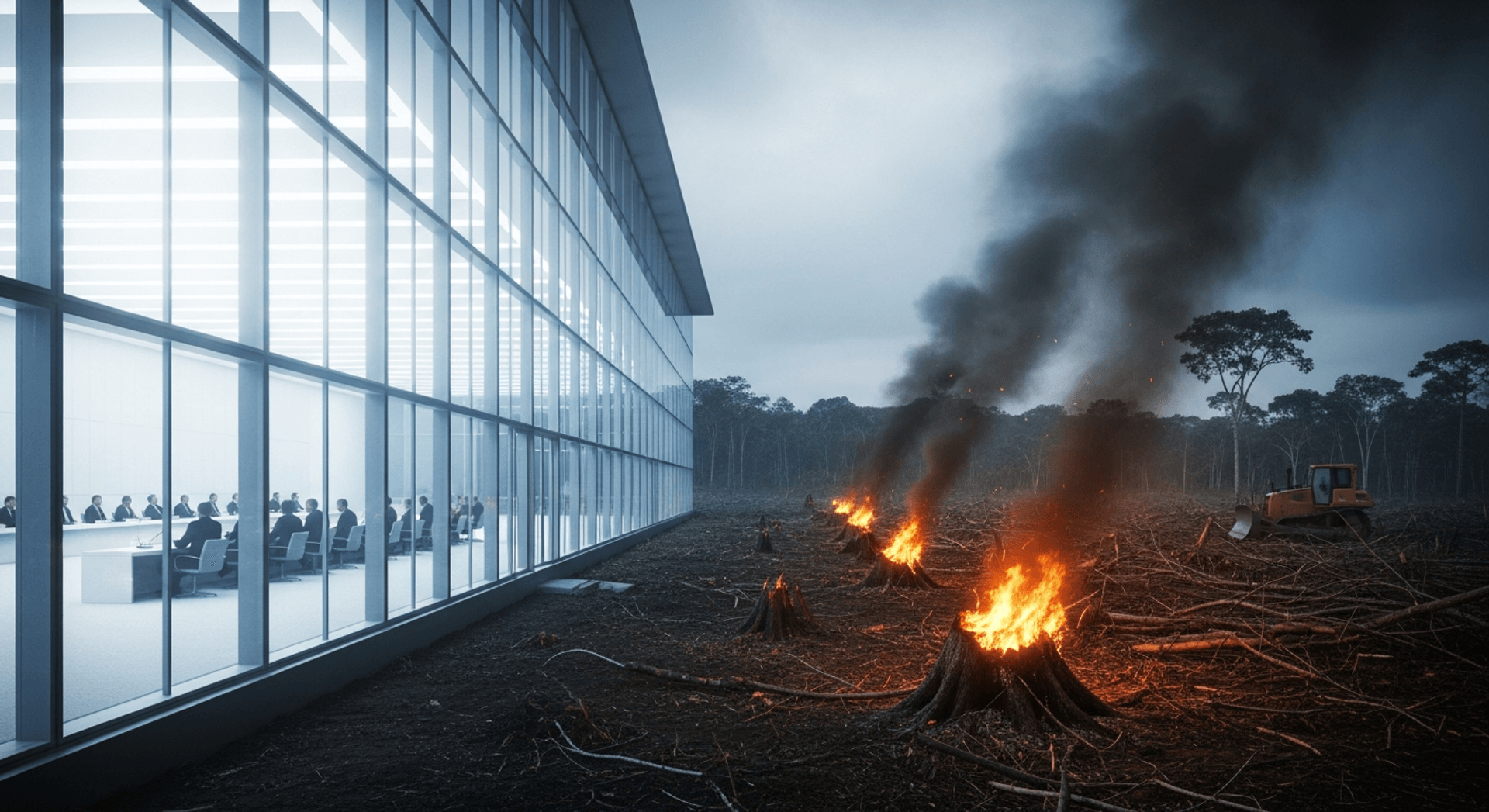
When a fire broke out at COP30 in Belém, Brazil—right after organizers cleared Amazon rainforest for conference infrastructure—policy analysts faced a critical question: Why did this incident trigger such massive public backlash?
Traditional market research would require weeks of surveys, focus groups, and stakeholder interviews to understand the symbolic power and public sentiment around climate action hypocrisy. Environmental policy teams needed answers immediately, while the conversation was still hot.
The Pain Points
Speed vs. Depth Dilemma: Policy windows close quickly. Waiting 4-6 weeks for traditional research meant missing the moment when recommendations could actually influence decision-makers.
Budget Constraints: Non-profits and advocacy groups couldn’t afford $15,000-20,000 for comprehensive stakeholder analysis across activists, engineers, economists, community leaders, and media experts.
Perspective Gaps: Understanding how different stakeholders—from Amazonian community leaders to highway engineers to student activists—interpreted the same event required accessing diverse voices that are expensive and time-consuming to recruit.
The Atypica Solution
Using Atypica.AI’s Research Agent, the policy team:
Defined the research question: “How do different stakeholders interpret the COP30 fire incident and its implications for climate governance?”
Let AI Personas simulate 15 expert interviews across environmental activists, ecological economists, engineers, community leaders, and media analysts—representing perspectives from Flora Verde (activist) to Dr. Alistair Finch (ecological economist) to Lakpa (community leader).
Generated a comprehensive 40-page analysis in just 20 minutes, including:
Multi-stakeholder policy evaluation framework
Media framing analysis across three dominant narratives
Systemic failure identification (economic valuation, planning gaps, governance deficits)
Strategic recommendations for conference organizers and policymakers
Impact Achieved
Short-term:
Published policy brief while the incident was still trending, securing media coverage and policymaker attention
Identified three distinct media frames (”Ironic Symbol,” “Logistical Failure,” “Minor Accident”) that shaped communications strategy
Uncovered specific technical alternatives (Bus Rapid Transit, smart traffic management) that engineers had advocated for
Long-term:
Built reusable framework for analyzing future climate governance contradictions
Equipped advocacy teams with data-driven talking points for “Net-Positive Host Selection Criteria”
Strengthened credibility with policymakers by demonstrating comprehensive stakeholder understanding
Before vs. After
Traditional ApproachWith Atypica.AI4-6 weeks for stakeholder interviews20 minutes for full analysis$15,000-20,000 research budgetPrice of a coffee subscription5-8 accessible interview subjects15 diverse expert perspectivesAnalysis available after news cycle endsInsights while story is trending
The Know-How
The research revealed a critical insight: the fire became a “burning contradiction” precisely because it gave physical form to pre-existing hypocrisy. As one simulated expert noted: “It’s like a farmer praying for a good harvest while he poisons his own field.” This metaphorical power—not the fire itself—drove public outrage and offered the strategic hook for policy recommendations.
Ready to decode complex policy contradictions at the speed of news? Try Atypica.AI’s AI Research and turn stakeholder insights into action before the policy window closes.
Read the full research report: The COP30 Fire: When Climate Conferences Burn
Atypica AI Research is built on a strong technical foundation. Our atypica.AI model runs on Amazon Bedrock Claude and is built on a modern, highly available, cloud-native architecture powered by AWS. From AI engines and infrastructure to container orchestration, databases, and security, Atypica receives comprehensive technical support from AWS, ensuring stability, continuity, and security for every Agent running in production.
Core AI Engine
The “brain” of Atypica.AI is powered by Amazon Bedrock. By leveraging Claude’s advanced long-context understanding and deep reasoning capabilities, Atypica’s Agents can cross-analyze collected information, extract insights, identify trends, and generate high-quality analytical content leading to differentiated commercial intelligence.
Global Database Architecture
To support efficient global information retrieval and low-latency service delivery, Atypica uses Amazon Aurora Global Database. This AWS-exclusive feature enables us to deploy a single database across multiple AWS Regions.
The primary Region handles write operations, while read-only replicas around the world synchronize data with sub-second latency, ensuring users always have fast access to up-to-date information—making near real-time global insights possible.